



Mercedes-Benz Demonstrates Its (Nearly) Autonomous Driving System in San Francisco
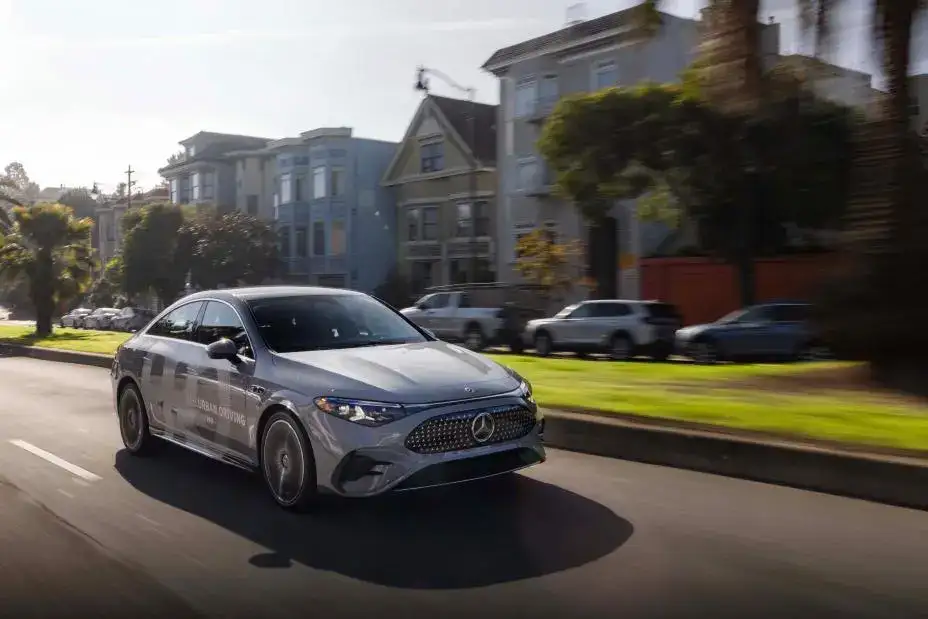
It would surprise no one that Mercedes-Benz was working on its own Full Self-Driving system. It’s called MB.Drive Assist Pro, and in January, they invited journalists to sample the system on the complicated streets of San Francisco. Mercedes-Benz of Plano tells you what they found.
In the simplest terms, Mercedes-Benz describes the system as a merging of navigation and driver-assist systems, allowing you to enter a destination. At the press of a button, the vehicle takes you to that location on its own. While the system clearly can perform this duty on its own, it adheres to the Level II autonomous designation by requiring the driver to maintain contact with the steering wheel and continue to look through the windshield.
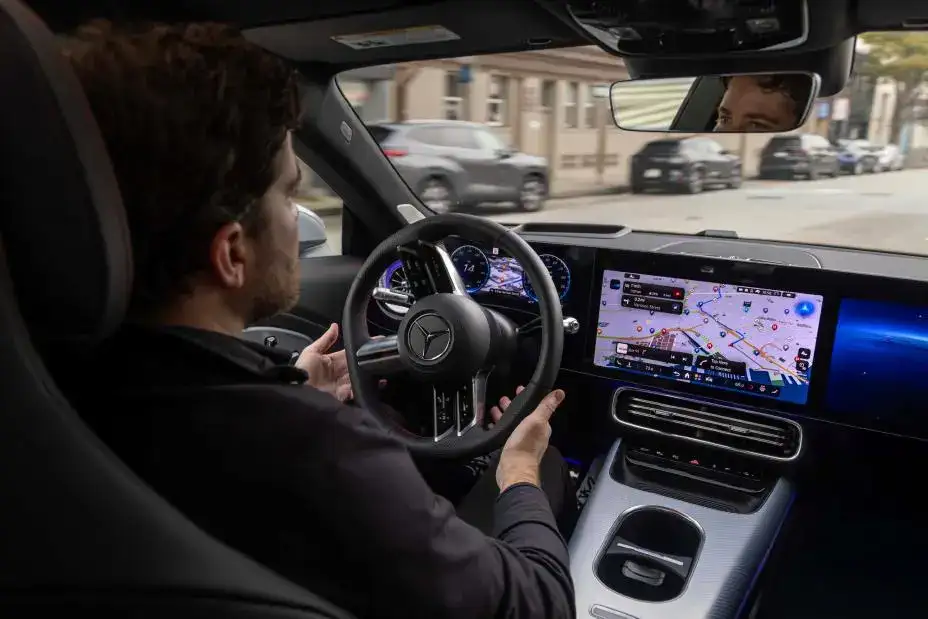
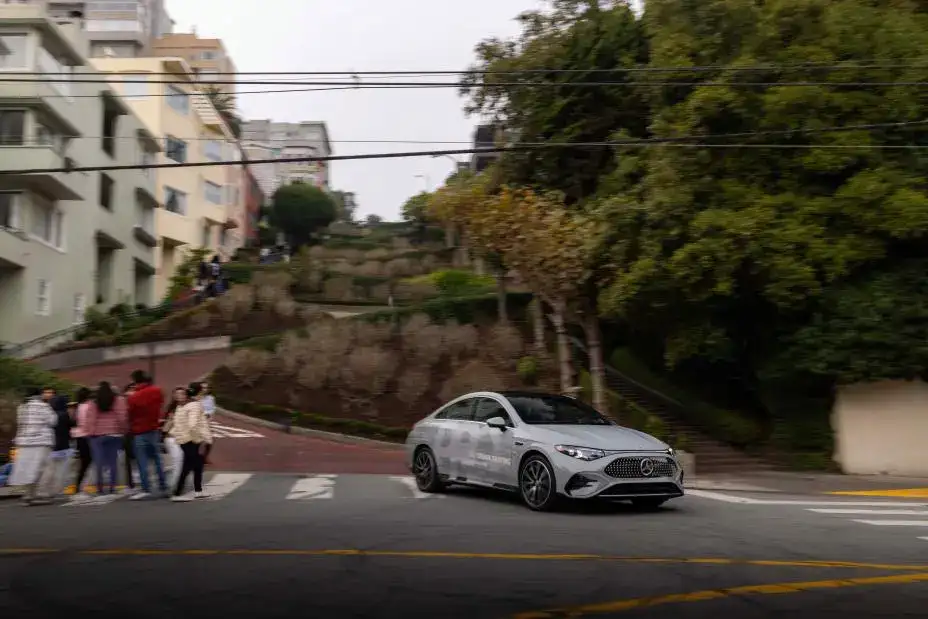
Mercedes-Benz collaborated with Nvidia on the system’s all-important AI component. The newly redesigned CLA model demonstrator is described as being equipped with 10 cameras, five radar sensors, and 12 ultrasonic sensors, all feeding data to an onboard supercomputer. Many of the sensors and cameras are redundant, providing backup for units that may fail or be blocked.
Motor Trend described the car as quite adept at “slowing down for and yielding to pedestrians; changing lanes in anticipation of a turn ahead; slowing for a car that cuts in; and reading a four-way stop to gauge its turn. It also calmly put on the turn signal and went around a car that suddenly stopped for no apparent reason, and it stopped for a woman and her dog crossing the street, but not at the light.”
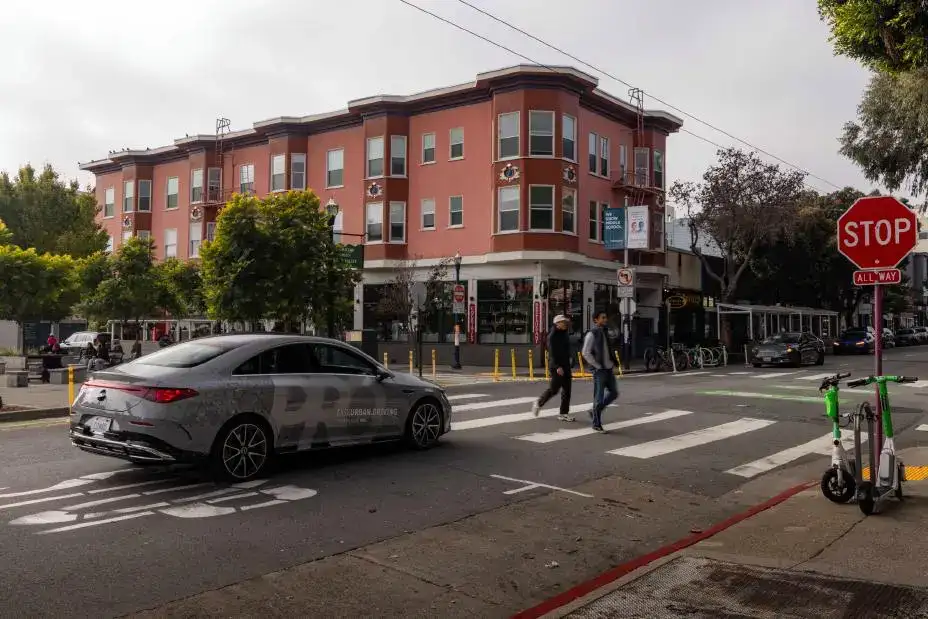
An author at InsideEVs describes listening to Lucas Bolster, the system’s chief manager, who was behind the wheel, explaining how the system worked. The author was anxious to see the system in action rather than just hear about it, and he realized it had been engaged and operating the entire time. It drove so seamlessly and human-like that he didn’t notice. That is in part because the system even performs courtesy moves, such as moving to the left to give a cyclist in the bicycle lane more space.
Indeed, the driver in an MB.Drive Assist Pro-equipped vehicle will still at least appear to be driving. There are capacitive sensors around the steering wheel that require contact. A camera above the center touchscreen monitors the driver to make sure they are paying attention. The driver can at any time use the steering wheel, say, to miss a mud puddle or a squirrel with a death wish, and encounter no resistance from the system, which automatically will resume once the action is complete. When asked why the system wasn’t designed to be fully hands-free, Bolster replied, “I think we don’t see a good safety case for that in urban driving right now. As soon as your hands are off the wheel, you automatically bring in a prolonged reaction time.”
The system also works much like cruise control, immediately disengaging when the driver applies the brakes and remaining off until the resume button is pressed. Motor Trend notes that the car will drive according to posted speed limits, but the driver can override the speed limit, and the vehicle will use the new speed as its set speed. After a stop, it will again obey speed limits. The system continually learns as it operates, and significant software improvements can be delivered through over-the-air updates.
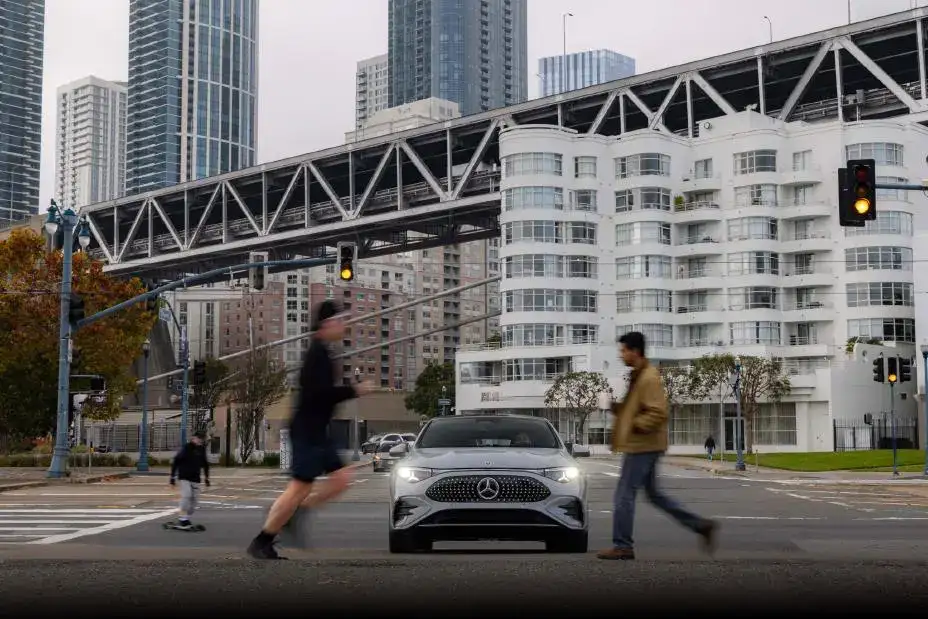
The InsideEVs author describes how the car handled this tricky situation: “A delivery van was backing up as a Waymo driverless vehicle approached. They ended up at cross-angles in the middle of the intersection, while a third car tried to squeeze by, and a woman with a baby carriage crossed the road. Our car watched, waited, and proceeded when safe to do so.”
It is notable that Mercedes-Benz chose to demonstrate this system in its least expensive model. Yes, it was the brand’s newest model, but it also signals that this technology will be readily available even on its most humble models, not just a plaything for the very rich. While the full system is up and running in China, the company is taking a more measured approach in the States. A limited version of the system, which offers steering, lane-change, and parking assist, will be a $1,950 option on the CLA. The full MB.Drive Assist Pro system, demonstrated in San Francisco, is expected to be active later in 2026.
If you are interested in trying the system at various stages, contact your favorite Mercedes-Benz of Plano sales professional to be notified when the first such CLA models arrive.
0 comment(s) so far on Mercedes-Benz Demonstrates Its (Nearly) Autonomous Driving System in San Francisco